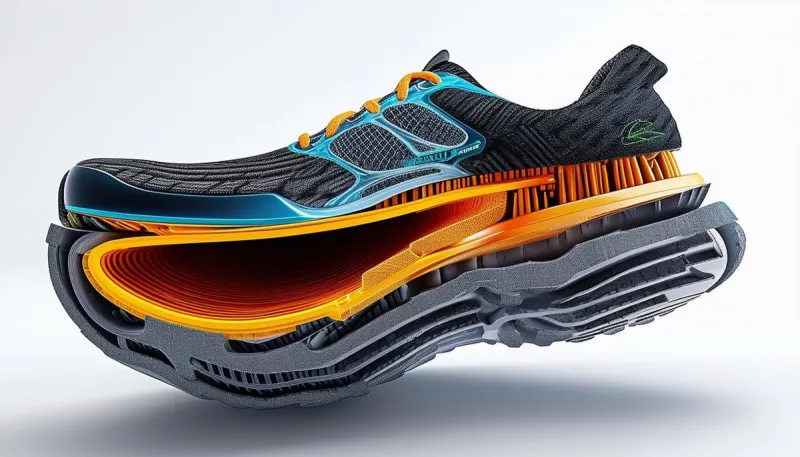
From Subway to Spreadsheet: The Case for Shoes That Actually Survive Your Entire Day
Let's be real for a second. If your morning routine involves cramming a pair of heels or dress shoes into a tote bag while you shuffle to the train in beat-up sneakers, you are not alone. Millions of American commuters do this exact dance every single weekday. It's practically a rite of passage in cities like New York, Chicago, and DC. But just because it's common doesn't mean it makes sense — and it definitely doesn't mean it's good for your body.
The average American commuter spends roughly 27 minutes each way getting to work, according to the US Census Bureau. That's nearly an hour of walking, standing on platforms, climbing stairs, and navigating cracked sidewalks before you've even opened your laptop. What you put on your feet for that hour matters more than most of us want to admit.
The Hidden Cost of the Bag-Shoe Strategy
Swapping shoes at your desk might feel like a clever workaround, but it comes with real trade-offs. First, there's the physical toll. Wearing unsupportive shoes — even for a short commute — can throw off your alignment and fatigue muscles that then have to carry you through an eight-hour workday. Podiatrists frequently see patients who chalk up chronic heel pain or tight calves to their office shoes, when the real culprit is the cumulative damage from those "quick" commute kicks.
Then there's the mental overhead. Packing a second pair, remembering to bring them home, keeping both in wearable condition — it's a low-grade logistical headache that adds friction to your morning before you've had a full cup of coffee. And from a style standpoint? The bag-shoe look rarely reads as intentional. It reads as survival mode.
The good news: the footwear industry has finally caught up to the reality of how Americans actually live and move.
What Your Commute Is Actually Asking of Your Shoes
Before you can find the right shoe, it helps to understand what the commute genuinely demands. Biomechanically, commuting involves a lot of transitional movement — quick pace changes, uneven terrain, stairs, and extended periods of standing on hard surfaces like concrete or subway platforms. Your shoes need to provide:
- Shock absorption to protect joints on hard city surfaces
- Lateral stability for unpredictable terrain and quick pivots
- Breathability because nothing derails a productive morning like arriving at the office with sweaty feet
- A sole with enough grip to handle wet sidewalks and subway grates
And yet they also need to look like they belong in a meeting room, not on a hiking trail. That used to be a near-impossible ask. Now it's a design brief that some of the most interesting shoe brands in the country are actively solving.
Brands Actually Building for the Commuter
A new wave of footwear companies has stopped treating office shoes and comfort shoes as separate categories. They're designing from the commute outward, and the results are genuinely impressive.
Allbirds built its reputation on the idea that comfort and clean design don't have to fight each other. Their Tree Runners and Wool Runners have become a quiet staple for office-casual environments precisely because they look intentional while delivering the kind of cushioning that makes a 20-minute walk feel easy.
Rothy's took a sustainability-forward approach to the commuter problem with their knit flats and loafers made from recycled plastic bottles. They're machine washable — a legitimately revolutionary feature for anyone who's ruined a pair of shoes in a sudden summer downpour on the way to an important meeting.
Cole Haan has long been a go-to for people who need dress shoes with performance underpinnings. Their ZERØGRAND line uses Nike-derived cushioning tech embedded in traditional oxford and loafer silhouettes, meaning you can walk five miles and still look like you stepped out of a boardroom.
On Running has crossed over hard into the lifestyle and business-casual space with silhouettes like the Roger Advantage and the Cloudnova, which pair Swiss-engineered cushioning with a clean enough look to work in most modern offices.
The pattern here is clear: the best commuter shoes are no longer asking you to choose between your body and your appearance.
A Framework for Choosing Your One Pair
If you're ready to retire the bag-shoe shuffle, here's a practical way to evaluate your options:
Step 1: Audit your actual commute. How far do you walk? What surfaces do you cover? Do you take public transit or drive? A person walking eight blocks in Manhattan needs different support than someone doing a short parking-lot-to-elevator routine.
Step 2: Know your office dress code honestly. Not the official policy — the real one. If your coworkers are in clean sneakers and chinos, you have a lot more flexibility than you think. If client-facing meetings are a daily reality, you'll want something that skews more traditional.
Step 3: Prioritize the sole first, the upper second. Most people shop shoes top-down, choosing based on how they look and hoping they feel okay. Flip that. Find a cushioning and support profile you trust, then look for it in a style that works for your environment.
Step 4: Test them on your actual commute before committing. Wear them on a weekend walk that mimics your route. Wear them to the grocery store. Break them in on your terms, not on a Tuesday when you have back-to-back meetings.
The Bigger Picture
There's something worth naming here that goes beyond footwear logistics. The commute shoe problem is, at its core, a reflection of how we've historically designed work life around appearances rather than human bodies. We've accepted that looking professional requires a certain kind of discomfort, and we've built workarounds — like the bag-shoe strategy — instead of questioning the premise.
But the modern workplace is shifting. Remote and hybrid work have loosened dress codes across industries. Wellness culture has made it socially acceptable — even admirable — to prioritize your physical health in daily decisions. And a generation of designers has grown up watching their parents wreck their feet in the name of professionalism and decided to do something about it.
Your commute is part of your day. Your feet are carrying you through all of it. The shoes you wear from your front door to your desk aren't a footnote — they're the foundation. It's time to treat them that way.
The right pair is out there. And it doesn't need to live in a bag.